Digital Assets, Real Impact is a series that showcases the good that has emerged from the world of decentralised finance, and the people driving meaningful change.
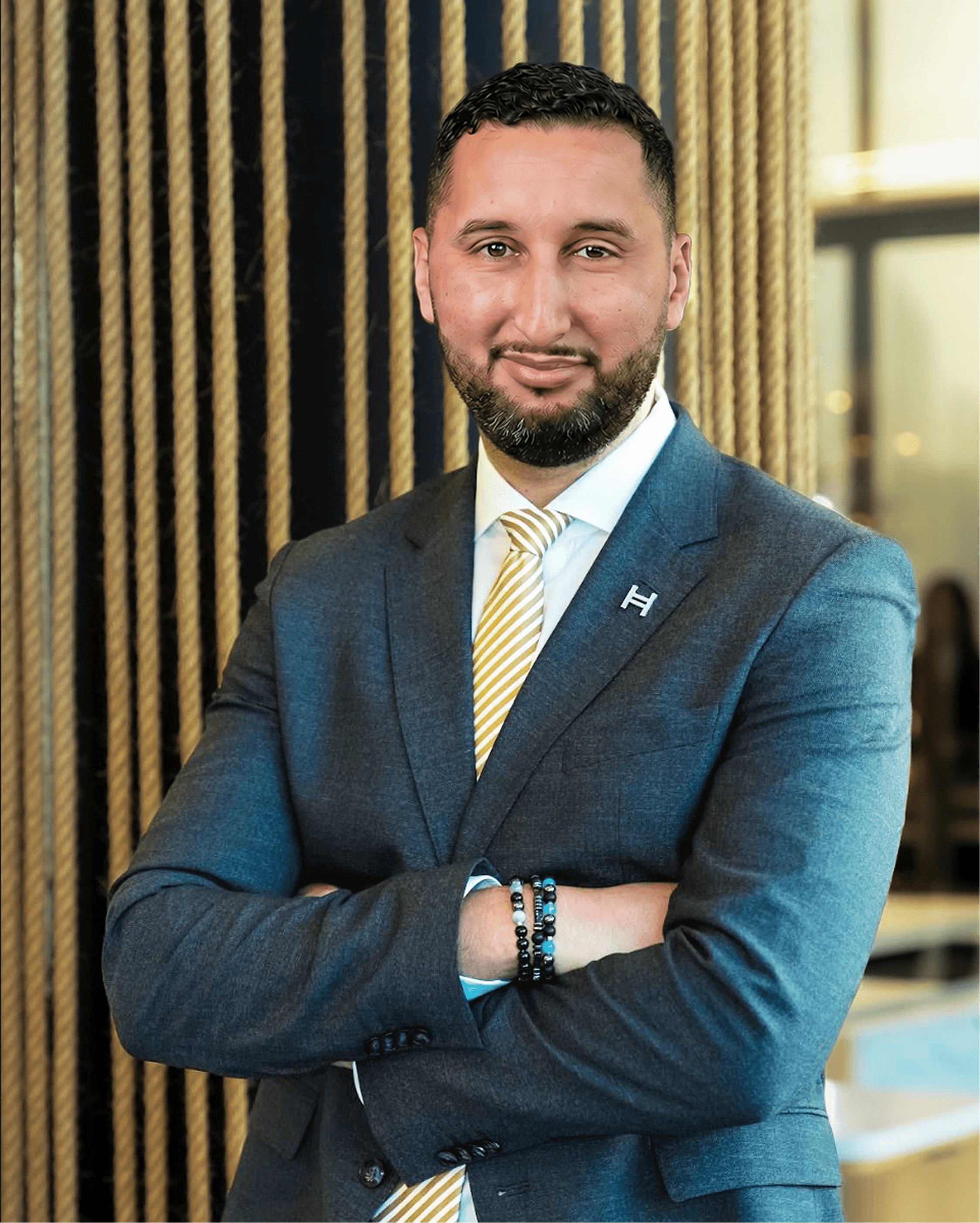
This week we sat down with Kamal Youssefi, President of the Board of The Hashgraph Association, to talk about how the organisation is funding and deploying Hedera-powered enterprise-grade solutions and decentralised applications to drive economic inclusion, digital transformation, and positive ESG impact across Europe, the Middle East, and beyond.
The Hashgraph Association is a non-profit headquartered in Switzerland that provides funding for innovation, research, and development enabling a digital future for all. Its programmes span training, venture building, and enterprise adoption of Web3 - with a particular focus on ensuring the benefits of distributed ledger technology reach organisations and populations that need them most.
Who are you, and what first drew you to the world of distributed ledger technology and digital assets?
I’m Kamal Youssefi, President of the Board of The Hashgraph Association, and a computer scientist by background. I began my career at SAP and EY, working with enterprise technology, before taking the entrepreneurial route and helping to establish Swisscom Blockchain. My interest in distributed ledger technology began with what it could do beyond cryptocurrency. I could see potential in areas such as digital identity, payments, asset tokenisation and the way organisations exchange information.
In 2018, I represented Swisscom Blockchain as one of the founding members of the Hedera Governing Council. Hedera’s speed, security and governance model gave me confidence that these ideas could move beyond experiments and become services used by enterprises, governments and communities.
What is the core problem The Hashgraph Association was built to solve?
The Hashgraph Association was created to help turn promising ideas into solutions that can be deployed and used.
Startups often reach the prototype stage and then find they need more funding, engineering expertise or help bringing the product to market. Enterprises and governments face their own hurdles, including regulation, integration and building a convincing commercial case.
We bring those forms of support together. Someone may begin with training or certification, move into an innovation programme and then receive further help through venture building, enterprise partnerships or investment.
As a non-profit, we can also take a longer view. We are able to support education, research and early-stage projects before they are ready for conventional commercial investment. Our role is to give strong projects a better chance of progressing from an early idea to something that people and organisations can use. The association structure also gives the community a voice in where we focus our efforts and how we support the wider Hedera ecosystem.
How does Hedera's architecture actually work, and what makes it suited to enterprise and government use cases in a way that other networks are not?
Hedera works differently from a conventional blockchain. Instead of collecting transactions into blocks, computers on the network share information with one another through a process known as “gossip about gossip”.
Each message includes details of where the information came from and when it was received. Over time, the computers build the same record of events and can agree on the order of transactions without sending separate votes around the network.
The network can reach agreement in seconds, even when some computers go offline or provide incorrect information. Hedera runs on proof of stake, which consumes far less energy than the mining process used by proof-of-work networks.
Enterprises and governments will look beyond speed. They also want predictable fees, strong security and a clear picture of who governs the network. Hedera has a Council made up of organisations from different industries and regions. Every member has the same voting power and serves for a fixed period, so control cannot remain with one organisation indefinitely.
Institutions can examine how the technology performs, how decisions are made and who is responsible for the network’s direction. This gives them a firmer basis for deciding whether Hedera is suitable for a regulated or public-sector service.
The Hashgraph Association funds training, innovation, and venture-building programmes globally. What kind of real-world impact are these programmes having - particularly for financial inclusion and underserved communities?
What excites me most is seeing people move from learning about the technology to building something useful in their own market.
The 2025 Hedera Africa Hackathon brought together more than 13,000 developers. More than 1,300 projects were submitted and over 45,000 people joined the education and certification programme across more than 20 African hubs and online.
The projects tackled problems including payments between networks that cannot easily communicate, renewable-energy certification and the protection of medical records. Strong teams can continue into further funding, engineering support, venture building and introductions to investors or enterprise partners.
In Tunisia, we worked with Enda Tamweel to launch a Hedera-powered loyalty programme for its microfinance clients. Enda has more than 544,000 active clients, including women, young people and entrepreneurs in rural areas. The programme recognises reliable repayments as well as actions with a positive environmental or social impact.
I see economic inclusion as giving people the skills, funding and practical support to develop their ideas. It also involves working with local institutions that already understand the communities they serve.
You work closely with governments and enterprises across Europe and the Middle East. What does it take to get institutional players comfortable with deploying web3 solutions - and where are you seeing the most progress?
In my experience, the starting point is the problem an organisation wants to solve. From there, it can examine the commercial case, the regulatory requirements and how the solution would work alongside its existing technology.
My time at EY and Swisscom taught me that a promising demonstration will only take a project so far. Procurement, legal, cyber security and business teams all need to be involved. The organisation also needs a realistic route from a proof of concept to a service it can operate at scale.
We help institutions work through that process, from the first idea to development and deployment.
The Middle East is moving quickly because governments are bringing policy, investment and delivery programmes together. In Saudi Arabia, we launched a DeepTech Venture Studio with the Ministry of Investment, designed to mobilise $250 million over five years. In Qatar, the $50 million Digital Assets Venture Studio is supporting work around regulated decentralised finance and digital assets.
The DIFC Courts in Dubai launched a Digital Assets Will built on Hedera and announced a Hedera-powered Digital Notary Service. In Europe, we are seeing progress around tokenisation, digital-asset infrastructure and verifiable sustainability data. Our work with Deloitte Netherlands on environmental and social impact reporting is one example of the technology being used within an established organisation.
ESG impact is central to The Hashgraph Association's mission. How does a distributed ledger technology like Hedera contribute to positive environmental and social outcomes - rather than the energy-intensive reputation that blockchain often carries?
ESG has been part of The Hashgraph Association’s work from the beginning. We look at the footprint of the network itself and at the applications being built on it.
Hedera uses proof of stake and requires very little energy to process transactions. The Hedera Council purchases verified offsets each quarter and offsets more carbon than the network produces, making Hedera carbon-negative.
There is also a wider problem around the quality of environmental and social data. Carbon markets, supply chains and impact programmes often involve several organisations collecting and checking information at different stages.
Hedera can record when information was submitted, who checked it and how a related credit or claim was later used. The organisations involved then have a record they can return to. Hedera Guardian converts sustainability methodologies into digital processes. It can produce verifiable records for carbon credits, renewable-energy certificates and other environmental assets.
Through our work with Deloitte Netherlands, Guardian forms part of an Environmental & Social Impact platform designed to help companies support their sustainability claims with evidence. Its first use case tracks the impact of mangrove restoration in Curaçao using satellite imagery, digital identity and other verified data.
I sometimes describe the ambition behind Guardian as creating a balance sheet for the planet. We want organisations to measure environmental and social performance with the same discipline they apply to their finances.
Similar records can support microfinance, qualifications and digital identity by helping people demonstrate their experience, achievements or eligibility for a service.
The digital assets space has seen its share of hype, scandal, and scepticism. How do you distinguish what The Hashgraph Association is building from the noise - and what would you say to fintech leaders who remain cautious about web3?
People have good reasons to be cautious about digital assets. We have to earn their trust by supporting applications that work, address a recognisable need and bring a clear benefit to their users.
Every project must show how it can move from an early idea into something people or organisations will use. Who is the user? What problem does it solve? Can it operate securely? Can it meet the relevant regulatory requirements?
Our role is to help projects work through those questions and develop into viable solutions. Hedera’s governance also gives institutions something concrete to examine. Its Council is made up of known organisations from different industries and regions. Each member has an equal vote and serves for a limited term.
I would encourage fintech leaders to stay curious and ask difficult questions. Look at the use case, compare the technology with the alternatives and decide what success should look like. Confidence will grow as more services prove their value through daily use.
What would the ideal web3 landscape look like in five years - and what role does The Hashgraph Association play in getting us there?
In five years, I hope Web3 will sit quietly behind services that people use every day. Someone might make a payment, prove their identity, transfer an asset or verify a qualification without needing to know which network completed the transaction.
I expect several networks to play a part. They will need to communicate with one another, particularly when enterprises and governments already operate across many different systems. Hedera’s speed, security, governance and predictable fees give it a strong role in that environment.
The Hashgraph Association is helping to build the talent, projects and partnerships needed to reach that point. We train and certify people, fund new ideas, support venture building and work with institutions through to deployment.
My aim is to see a vibrant global ecosystem where entrepreneurs can find investment and customers, institutions can offer more trusted digital services and more people can take part in the digital economy.